Ask most Americans what Sweden makes and you will get furniture, cars, meatballs, and a flat-pack bookcase that ruined somebody’s Saturday. Almost nobody says wallpaper.
Apparently Sweden was already showing up at my house. I just wasn’t looking at the walls yet.
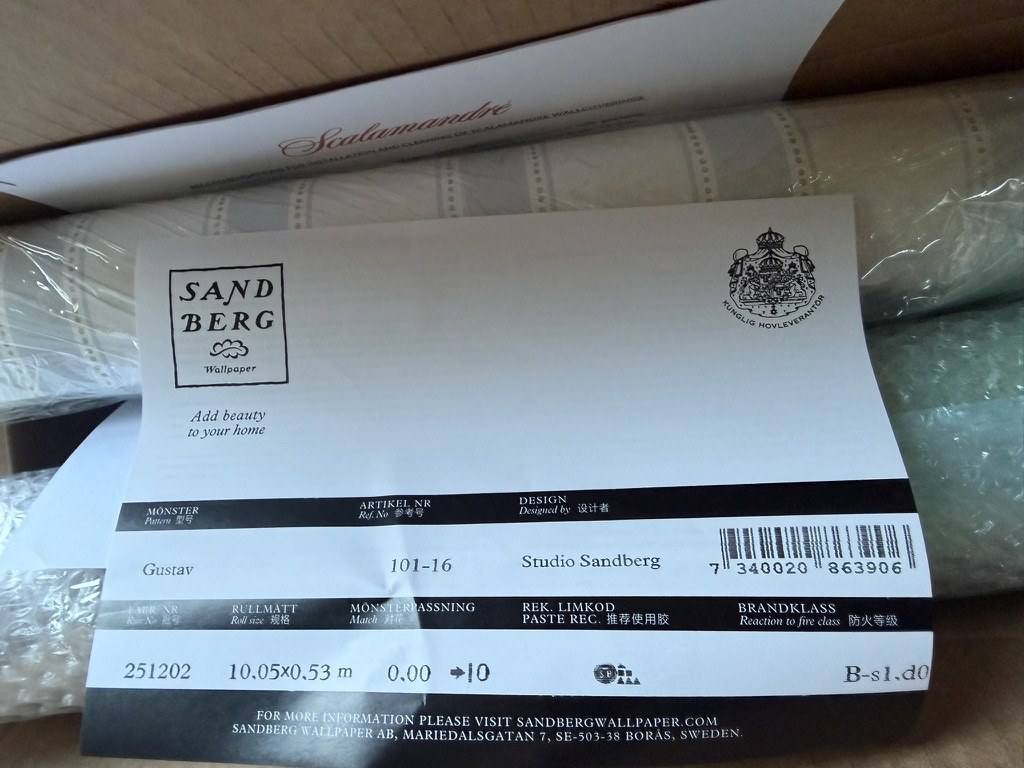
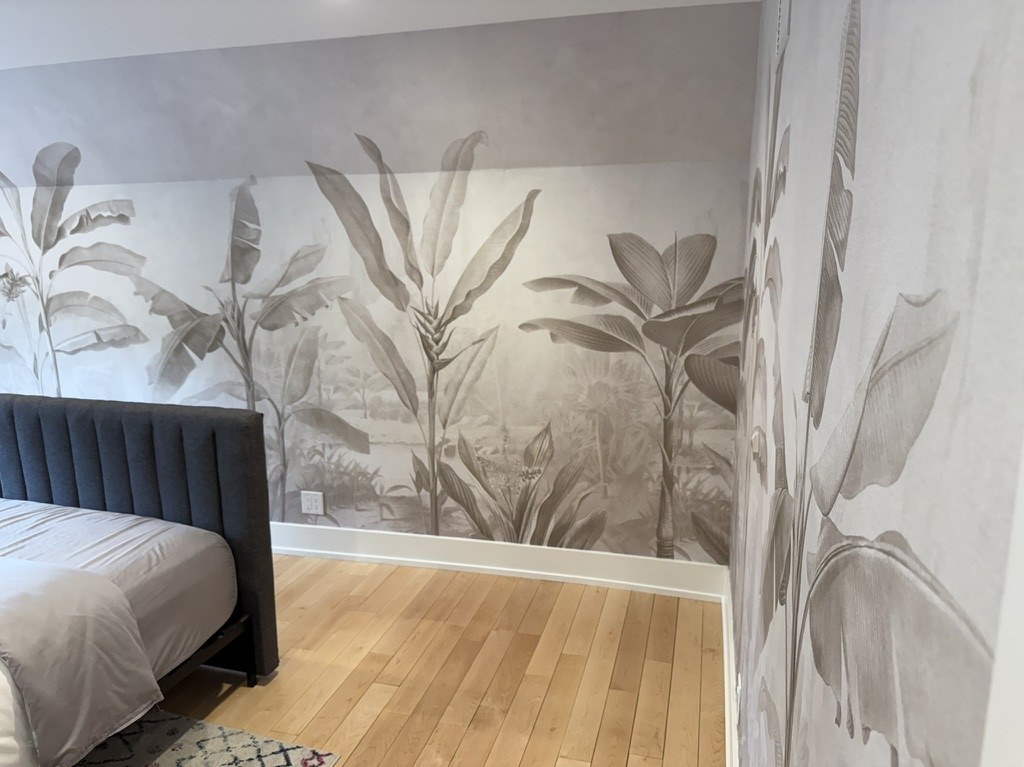
I hang wallpaper for a living in Metro Detroit, and the boxes arriving at my jobs have been telling a different story. Most of my work now is murals, and most of those murals come from Sweden.
I should say where I stand before you read any further. I am a fan. The Swedish non-wovens are the best goods I hang, and Boråstapeter in particular makes wallpaper I genuinely love working with. This piece is not an exposé. It is me trying to work out how a small town in southwestern Sweden ended up supplying so much of what goes on American walls — and why the material itself is so much better than what a lot of the trade is still selling.
The return addresses started repeating
Around 2017 or 2018, Rebel Walls was one of the first Swedish mural names I started seeing on my jobs. I hadn’t heard of them. I made a note of the name and moved on.
Then more Swedish names kept turning up.
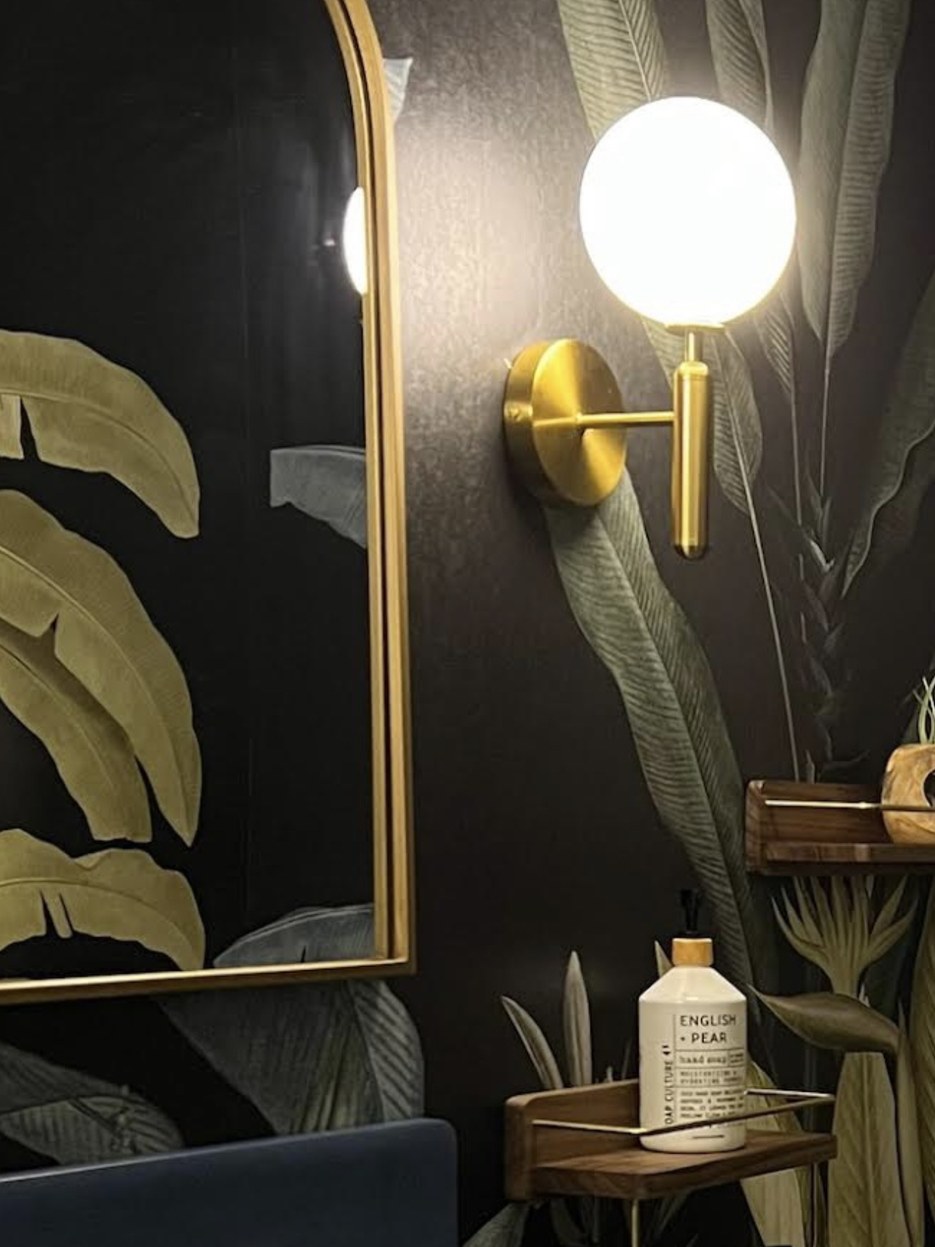
Boråstapeter on a powder room. Photowall on a custom landscape. Hovia on a dark tropical. Different brands, different price points, different design languages — and a strange amount of overlap in where the goods were coming from.
Roughly half my work comes through design teams who bring me in to measure. So I see what designers are specifying before the homeowner does, and I see it across a lot of houses. What I was seeing was a shift. Repeating patterns on 27-inch rolls were giving way to made-to-measure murals, and a disproportionate share of those murals had a Swedish return address.
I wanted to know why. What I found was less about design trends than about manufacturing — and a good deal older than I expected.
Sweden has been printing wallpaper longer than you think
The oldest surviving paper wallpaper in the Nordic countries was found in a house in Malmö and dates to around 1570 — though it is worth being precise about what that does and doesn’t prove. Malmö was Danish at the time, and the paper itself was imported rather than made locally. It tells you people were papering walls up here very early. It does not tell you Sweden was manufacturing.
Swedish manufacture comes later. The first known privilege granted for a Swedish wallpaper factory dates to 1730, and reliable documentation of actual printed wallpaper production begins around the 1740s — in Norrköping, a maker named Anders Utterberg held a royal privilege for a wallpaper works by 1743.
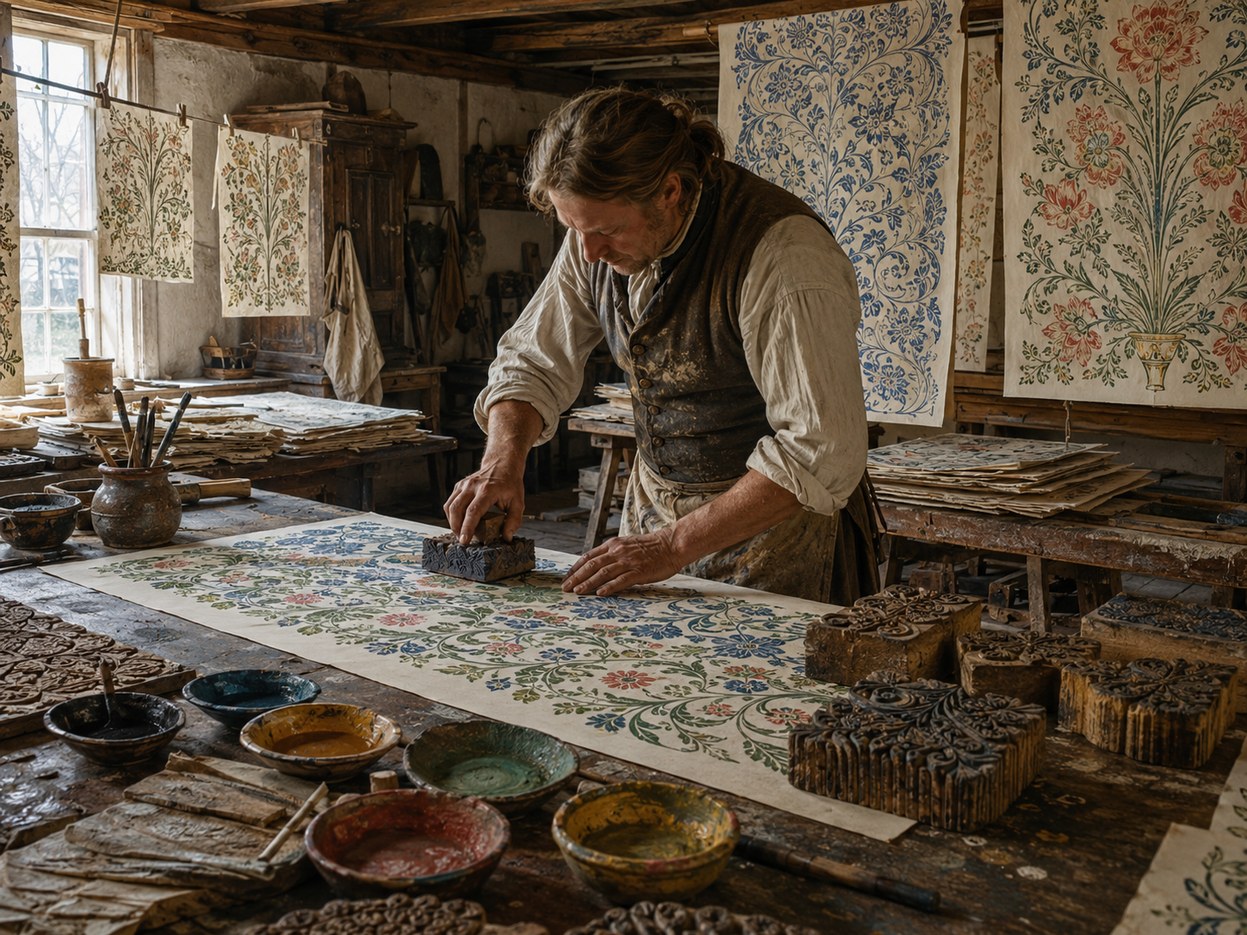
For most of that history the work was done by hand, block by block. Around 1860, roller printing began displacing hand-block work, and from the 1870s onward Swedish production grew enough that the country became far less dependent on imported French papers.
That matters more than it sounds. A country that makes its own wallpaper for a hundred and fifty years accumulates things that are hard to buy later: presses, print operators, colorists, archives, and a domestic customer base that expects wallpaper to exist.
Why Borås, of all places
A remarkable amount of this story concentrates around one part of southwestern Sweden — the Sjuhärad district, and specifically the town of Borås. Not all of it: Photowall is in Stockholm, Duro is up in Gävle, Nordic Walls is in Jönköping. But enough of it that once you start pulling labels, you keep landing in the same place.
Part of the reason Borås became Borås was agricultural necessity. The soil around Sjuhärad was poor. Farming alone did not support the population, so from the 1500s households wove cloth at home and traded it. When industrial machinery arrived in the early 1800s — partly, it should be said, by way of industrial espionage — the region already had the skills. It simply mechanized what it had been doing for three hundred years.
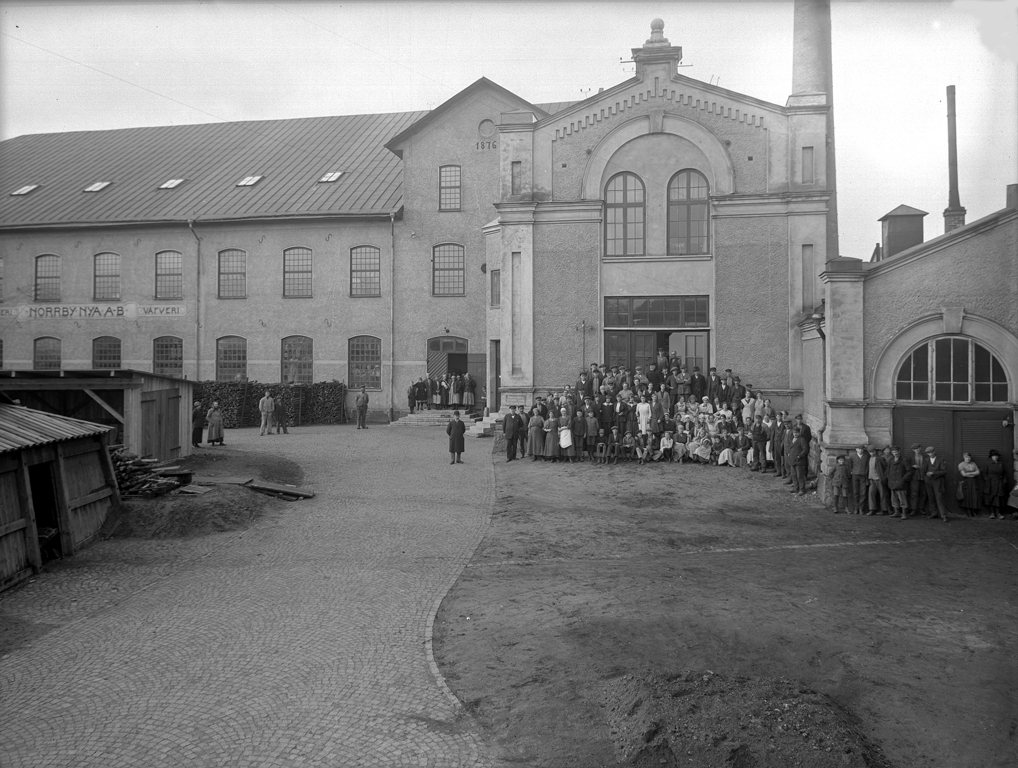
Borås grew from roughly 3,000 people in 1860 to about 30,000 by 1920. It became Sweden’s textile town.
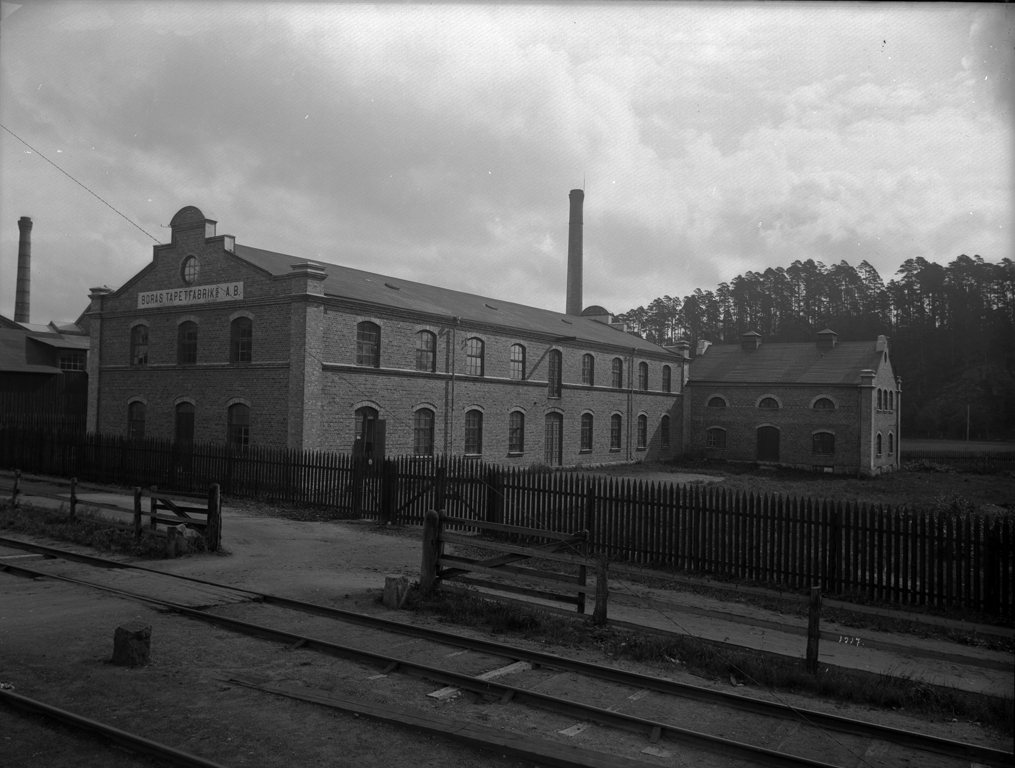
Then the textile industry went the way textile industries go. Between the 1950s and the mid-1970s, Swedish textile manufacturing declined sharply and production moved abroad. But — and this is the part that matters for wallpaper — the headquarters, the design studios, the administration and the logistics stayed in Borås. The sewing left. The knowing how to run a business that puts patterns on flat goods did not.
Boråstapeter was founded in Borås in 1905 by Waldemar Andrén, whose stated ambition was to put wallpaper within reach of ordinary Swedes rather than only the wealthy. The company is still there. Its archive holds more than 10,000 designs, including licensed patterns from Arne Jacobsen and Alvar Aalto, and Gocken Jobs’ Trollslända, first shown in 1945 and still in production.
The sewing left Borås. The knowing how did not.
The decades wallpaper nearly disappeared
Here is the question I could not answer for a long time. Wallpaper very nearly died in the West. So how was there anything left in Sweden to take advantage of digital printing when it arrived?
Start with how bad it got over here. Home Depot dropped the category entirely in 2005, and for a stretch afterward Menards was the only mass merchant still stocking it. York, Pennsylvania had once been home to several wallpaper mills; York Wallcoverings ended up one of only a handful of large American manufacturers left standing. A market research firm surveying the category in 2008 summed the period up as a decade of declines.
The tempting story is that Sweden somehow sat this out. It did not.
Sweden had more than fifteen wallpaper factories in the 1970s. Only a handful remain. By 2005, Swedish wallpaper production had fallen to roughly half its 1970s peak.
The consolidation has names. In 1966 three firms merged into AB Tapetinvest, which bought two more factories three years later and became, as Engblad & Co — marketed as Eco-tapeter — one of the largest wallpaper producers in the Nordics. By the mid-1970s it was Sweden’s leading wallpaper manufacturer, with its headquarters and factory in Norrköping and around 225 employees.
In 1978 it suspended payments. It moved operations to Anneberg in the 1980s. In 2002 it was bought by Boråstapeter, which moved the production to Borås.
And that acquisition was not a rescue. Boråstapeter bought the brand and some of the production — not the Anneberg factory, which closed. Around seventy people lost their jobs.
So the honest version is not that Sweden kept its industry. Sweden lost factories too. What happened is that the survivors — brands, archives, expertise and a share of the actual printing capacity — became increasingly concentrated, and much of that concentration happened around Borås.
Boråstapeter itself came close to going under. Its own account of the period is candid: efficiency drives across the industry in the 1950s squeezed profitability until the company’s finances were shaky. Its factory manager describes it as a turning point where something drastic had to happen. In 1961 a retailer consortium was formed — 87 paint and decorating retailers came in as shareholders, on the condition that they agree on a common product range. That handed Boråstapeter both capital and a route to market in one move.
The timing was extraordinarily lucky. Sweden’s Million Programme — a state housing effort that built roughly a million dwellings between 1965 and 1974 — came along immediately afterward and produced an enormous quantity of new apartment walls that needed papering. Boråstapeter’s wallpapers went into those apartments in quantity; through the end of the 1970s, its typical customer was a housing company building for the programme. That gave it a large institutional domestic market at exactly the right moment.
And when that ran out, the company did not retreat. By 2015 Boråstapeter was describing itself as one of the few Swedish wallpaper companies to have kept production in the country, and reported that turnover had grown from SEK 36 million in the 1980s to SEK 550 million — through acquisitions, international expansion, innovation and new collections, with 45% of sales coming from outside Sweden.
That is the real answer. Not immunity. Consolidation, a huge domestic housing market at exactly the right moment, and then a documented set of choices through the lean decades: keep production in Sweden, acquire brands, expand exports, innovate, and keep launching collections.
The result was that when non-woven substrate and wide-format digital printing arrived, Borås still had presses running, designers on payroll, an archive worth reprinting, and people who knew how to get ink onto a roll.
Swedish design was already traveling
Meanwhile, Swedish design had been arriving in America for decades. Josef Frank — Austrian-born, working for Stockholm’s Svenskt Tenn — had work shown in New York and San Francisco in 1939, and spent part of the 1940s in New York.
He also made a decision that says something about how wallpaper was regarded there: he refused to reuse his fabric patterns as wallpaper patterns. A wall was not a curtain. If it was going to be papered, it got a design drawn for a wall.
The factory that nearly didn’t make it
About half an hour from Borås, on Lake Åsunden, sits the town of Ulricehamn. Wallpaper has been made there for close to 170 years.
Ulricehamns Tapetfabrik kept doing traditional surface printing as much of the industry moved to faster processes. That is a hard commercial position to hold, and it did not always go well — the factory lost orders and struggled financially. It survived anyway, and it is now the place where a particular kind of Swedish wallpaper gets made: Svenskt Tenn’s line, including the Josef Frank designs mentioned above, printed in distemper; plus work for Långelid von Brömssen, Studio Lisa Bengtsson, Studio Cathy Nordström, Littlephant, Norrviva, Mimou, and project work for Acne Studios.
Worth noting for anyone hanging it: those traditional surface prints now run on a non-woven substrate. Old print process, modern backing.
The material that made made-to-measure murals practical
If you take one technical thing away from this article, make it this one.
Conventional paper-backed wallpaper absorbs moisture. You paste the back, fold it onto itself, and let it sit — booking — while the paper takes up water and expands. Then you hang it, and as it dries it gives that dimension back. Managing that movement is part of the job. It is not the only thing that opens a seam — wall preparation, adhesive choice, technique, coating and site conditions all get a vote — but it is one more variable the hanger has to control.
Non-woven is different. According to the Wallcoverings Association, the backing is produced on a paper machine from long-fiber cellulose pulp combined with textile fibers and binders — the same broad fiber family as coffee filters, teabags and gauze. It went mainstream in the mid-2000s.
The property that matters is dimensional stability. It is highly stable and does not appreciably stretch when wet.
Everything follows from that. You can paste the wall instead of the paper. You can hang it dry, straight off the roll. There is no booking and no waiting. The strip you put on the wall is essentially the same size ten minutes later as it was when you cut it. Boråstapeter’s EasyUp system is this exact principle under a brand name.
For a printed mural, that stability matters enormously. A mural is one continuous image split into panels. If panel three moves a sixteenth of an inch relative to panel four, the image breaks and there is nothing you can do about it on the wall. Non-woven is what made made-to-measure digital murals practical to manufacture, ship and install at scale.
One caution, because I would rather be accurate than tidy: not every non-woven strips dry in full sheets. Some are listed as wet-removable. Read the actual roll label rather than assuming.
And a distinction I want to be clear about, since these two get run together constantly: I recommend these non-woven wallcoverings. I do not recommend peel-and-stick wallpaper. Different product, different tradeoffs, and I have written separately about why.
Why all of this landed at once
Two things collided.
Wide-format digital printing got good and got cheap. That killed the economics of minimum order quantities. A pattern no longer has to justify a print run — it has to justify a file.
And non-woven gave that digital image a backing that would hold its dimensions from the printer to the wall.
Either one alone gets you much less. Printing onto a substrate that changes dimension makes a multi-panel image harder to align predictably — paper murals exist and can be hung well, but the tolerances are less forgiving. A stable substrate with no cheap way to print short runs gets you the same catalog of repeating patterns you always had. Together, they get you a company that will print a photograph of a mountain lake to the exact dimensions of your dining room wall and ship it in a week.
That is the actual product I keep installing. Not “wallpaper from Sweden.” Made-to-measure printed images, manufactured by an industry that happened to still be standing when the technology arrived.
Four ways Swedish wallpaper reaches an American wall
Once I started tracing labels, the routes sorted themselves into four.
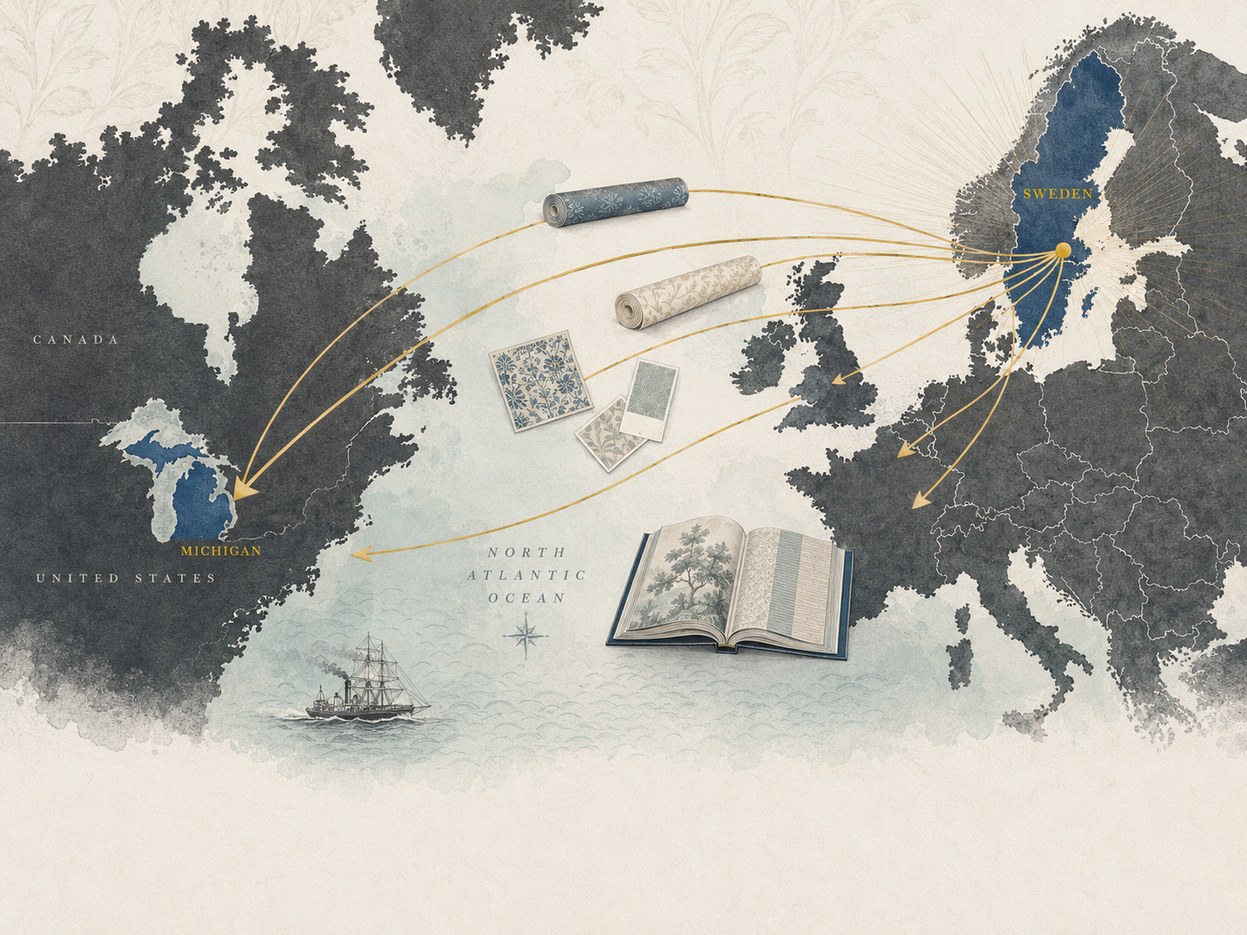
1. A Swedish brand, sold as a Swedish brand
The straightforward case. Boråstapeter is Swedish, is named for Borås, and does not hide it. In North America it is distributed exclusively by Schumacher, which lists roughly 450 Boråstapeter items with Sweden as the country of origin. If you have specified Boråstapeter through a designer in the States, you probably went through Schumacher without particularly noticing.
2. A foreign brand owned by a Swedish group
Two Borås-based groups own a surprising amount of what looks like an international field.
Embellence Group — formerly WallVision, renamed in February 2022, listed on Nasdaq First North Premier, headquartered on Ryssnäsgatan in Borås — owns Boråstapeter, the British house Cole & Son (acquired 2008), the Italian Wall&decò (2018), a manufacturing company called Borås Tapetfabrik, and several non-wallpaper brands besides.
Gimmersta Wallpaper Company owns Rebel Walls, Sandberg, HappyWall, the French Bien Fait, and the British Hovia (acquired 2024). Rebel Walls was founded in 2012 by Irene and Christofer Gimmersta — third generation in the trade; their grandfather Folke started as an errand boy at a wallpaper factory in the mid-1920s. The company produces in Borås and in Liverpool.
So a designer who specifies Cole & Son for one client and Hovia for another may reasonably believe she is buying British twice. She is buying from two Swedish parent companies.
3. A foreign brand, physically printed in Sweden
Different from route two, and easy to miss. Here the brand is genuinely independent — not Swedish-owned at all — and simply has its wallpaper manufactured in Sweden. House of Hackney is one documented example. I’ll come back to that one, because I’ve hung it myself.
When Embellence reorganized in 2022, Borås Tapetfabrik was spun out as its own company. It sits in Viared, just outside Borås. It is not a secret operation — it openly advertises for work, soliciting “wallpaper companies, designers, lifestyle brands and construction companies.” It runs digital, flexo and collagraph printing, plus traditional surface printing on a machine that has been in service since the early 1900s. The plant itself was built in 1979. The press is older than the building around it.
4. Private label, where the factory stays behind the brand
And here is the one almost nobody talks about.
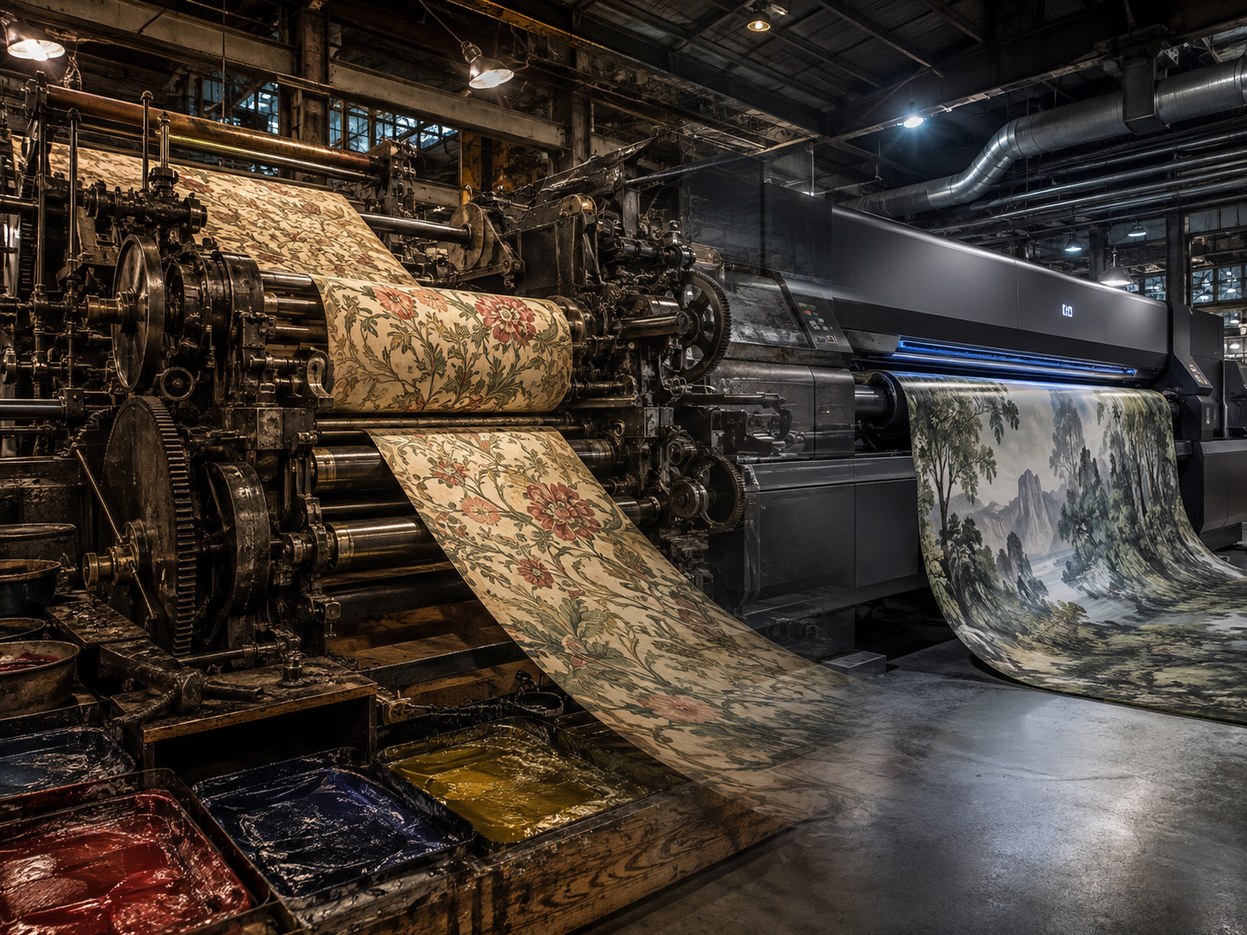
Rebel Walls, from the other group, publicly offers private-label manufacturing. It will print under another company’s brand, hold that company’s stock, or dropship directly to that company’s customers, with no minimum order quantities. In that arrangement the Swedish manufacturer may be almost invisible in the brand story — country-of-origin information can still appear on the packaging and in regulatory documentation, but nothing in the marketing has to mention it.
I have had this arrangement come through my own hands.
In the summer of 2025 I hung Bradbury & Bradbury’s Briar Rose in Natural for a client here in Michigan. Bradbury is an American company, founded in Benicia, California in 1979, long known for hand-silkscreened historical patterns. Their lead designer once told an interviewer that most companies design but outsource production, and that doing it all under one roof
was what had been unique to them.
The goods shipped from Borås, on a 10.05-metre European roll. As of 2025, for whatever reason, Bradbury’s non-woven line was being printed by Rebel Walls.
I am not the only one who noticed the goods had changed. Another installer wrote publicly that Bradbury’s papers used to arrive with an unprinted selvedge you trimmed by hand, and screen-printed inks that could wrinkle — and that after the company changed hands they came pre-trimmed, digitally printed, on a stable non-woven substrate. That is a fair description of what I unrolled.
The numbers say this is not a side business. In Embellence’s 2025 annual report, sales to external wallpaper brands came to SEK 101 million, up from 85 million — a 19% increase in a year when group net sales fell from 778 to 765 million. External manufacturing went from 11% to 13% of group sales. The branded division shrank overall; Boråstapeter itself grew, from 273 to 287 million, while Cole & Son fell from 141 to 134 and Wall&decò from 94 to 87.
In the second quarter of 2026, reported in July, group sales fell about 6%. Boråstapeter did 61 million, down 7%. Cole & Son did 30 against 34 the year before. Wall&decò 19 against 23. Embellence’s wallpaper brands were down across the board. What grew was external sales through Borås Tapetfabrik, at 30 million against 26. Printing other people’s wallpaper produced roughly the same revenue that quarter as the Cole & Son brand did.
The analysts at ABG Sundal Collier estimate that Borås Tapetfabrik holds more than 80% of Sweden’s traditional wallpaper-printing capacity. After a factory visit in 2025, they also reported that the existing digital operation had enough available capacity to at least double production. Both figures are analyst estimates rather than company disclosures, but they point in the same direction as the company’s own sales numbers.
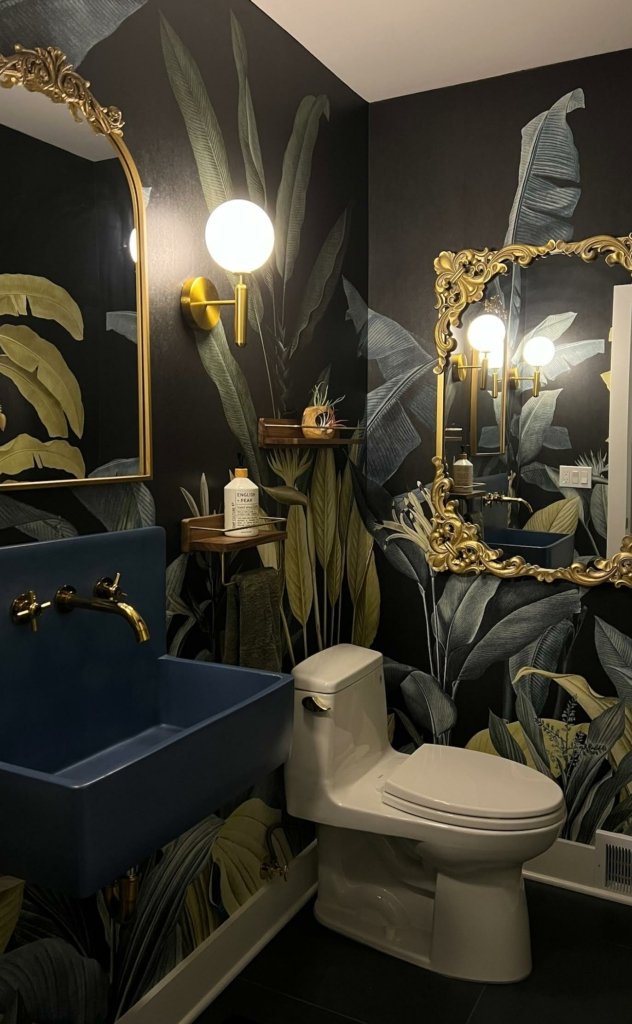
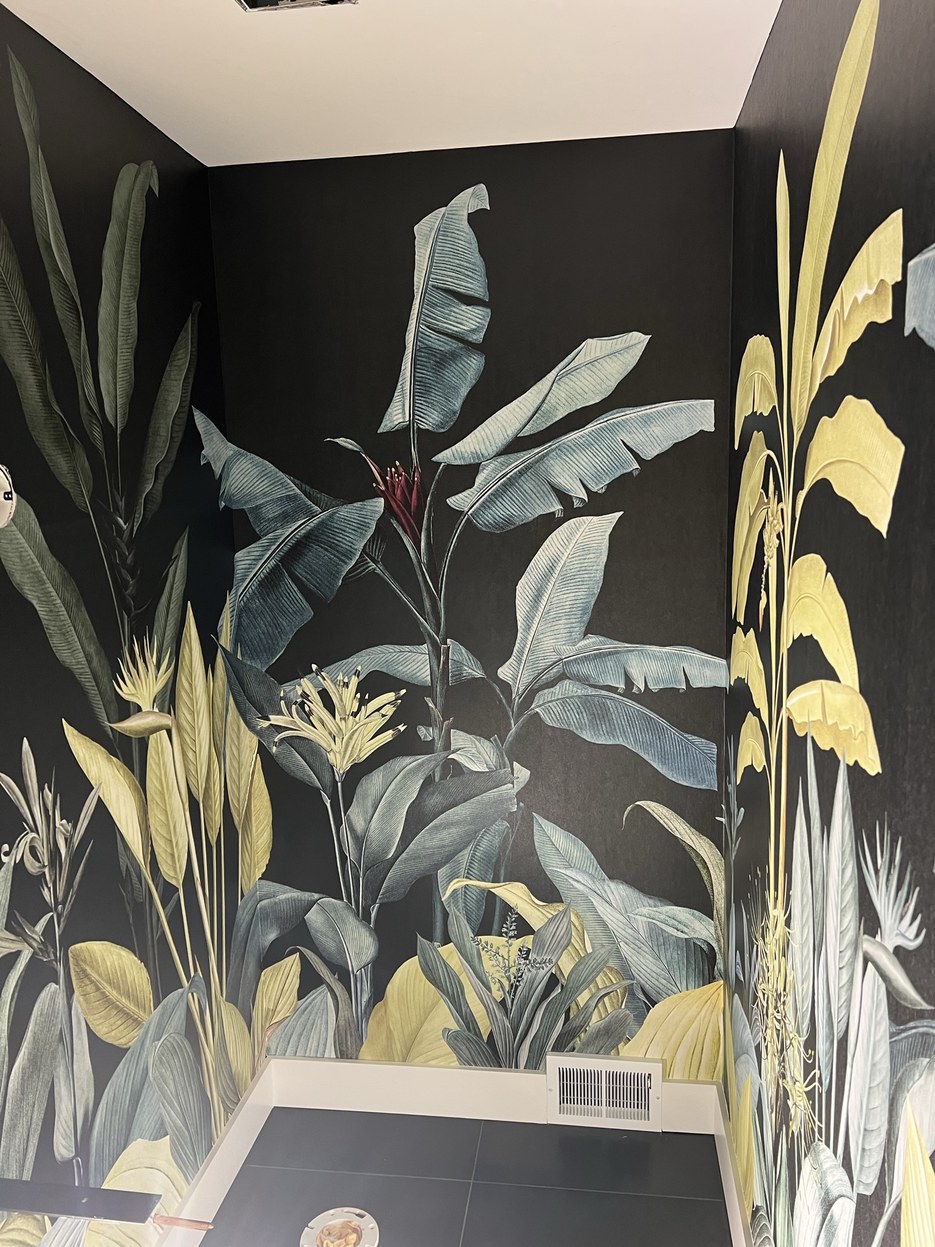
A Swedish-printed wallpaper in Birmingham, Michigan
All of this stayed abstract until I put it together on a job I had already finished.
House of Hackney is a London brand. Independent, unmistakably British, priced accordingly. On their own factories page, and on their product pages, they state that their wallpaper is printed at Borås Tapetfabrik in Viared, Sweden. Third-party listings corroborate it — retailers give the country of origin as Sweden, and at least one marketplace files their papers under Swedish wallpaper outright.
None of that is a gotcha. Their broader collection copy covers wallpaper, fabric, blinds, cushions and other products. The wallpaper specification itself is more specific: it is printed in Sweden.
I installed a good deal of House of Hackney at GlamJail in Birmingham, Michigan — multiple patterns, throughout the building.
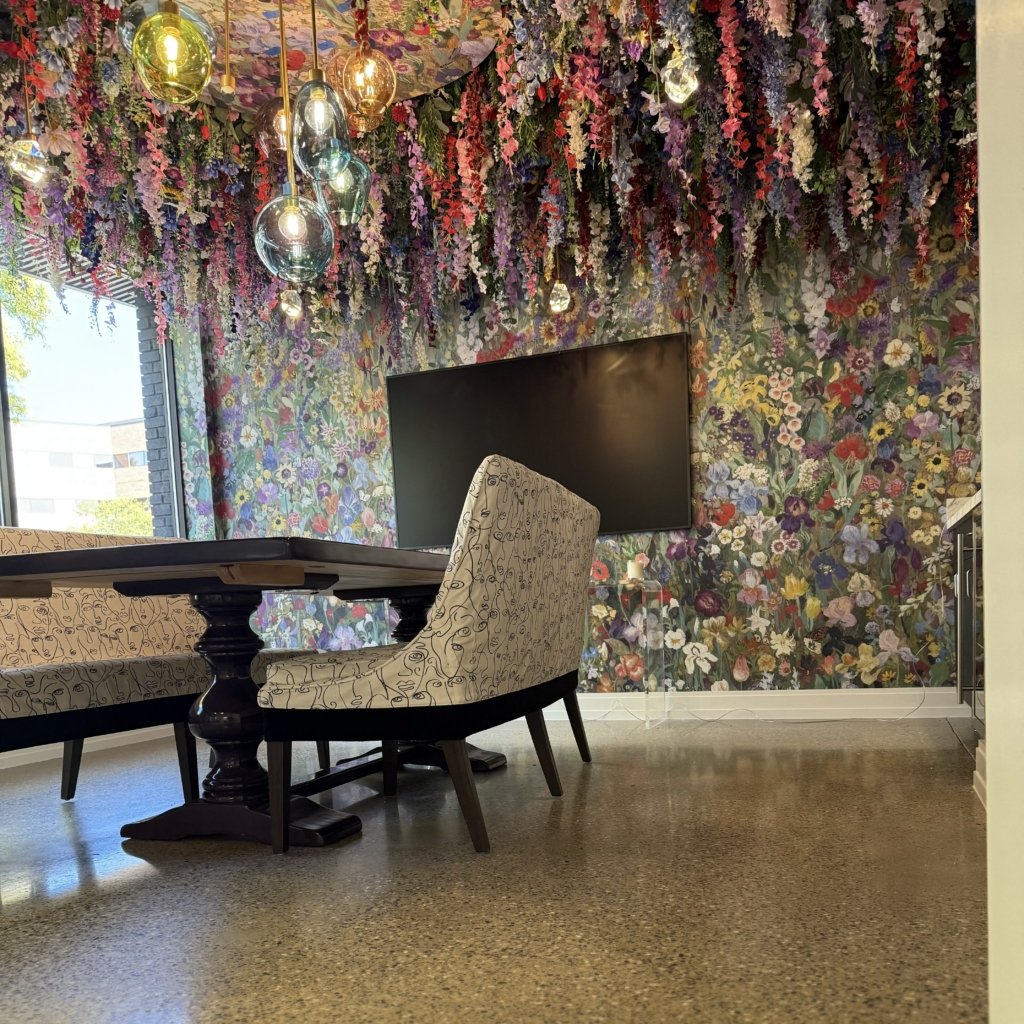
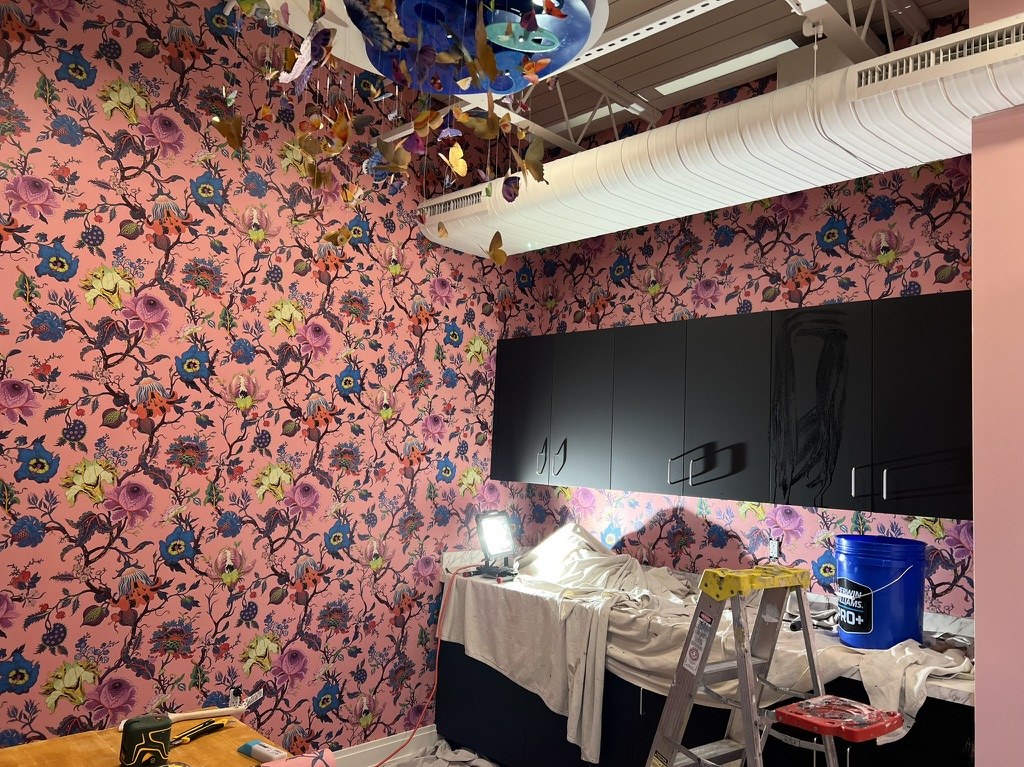
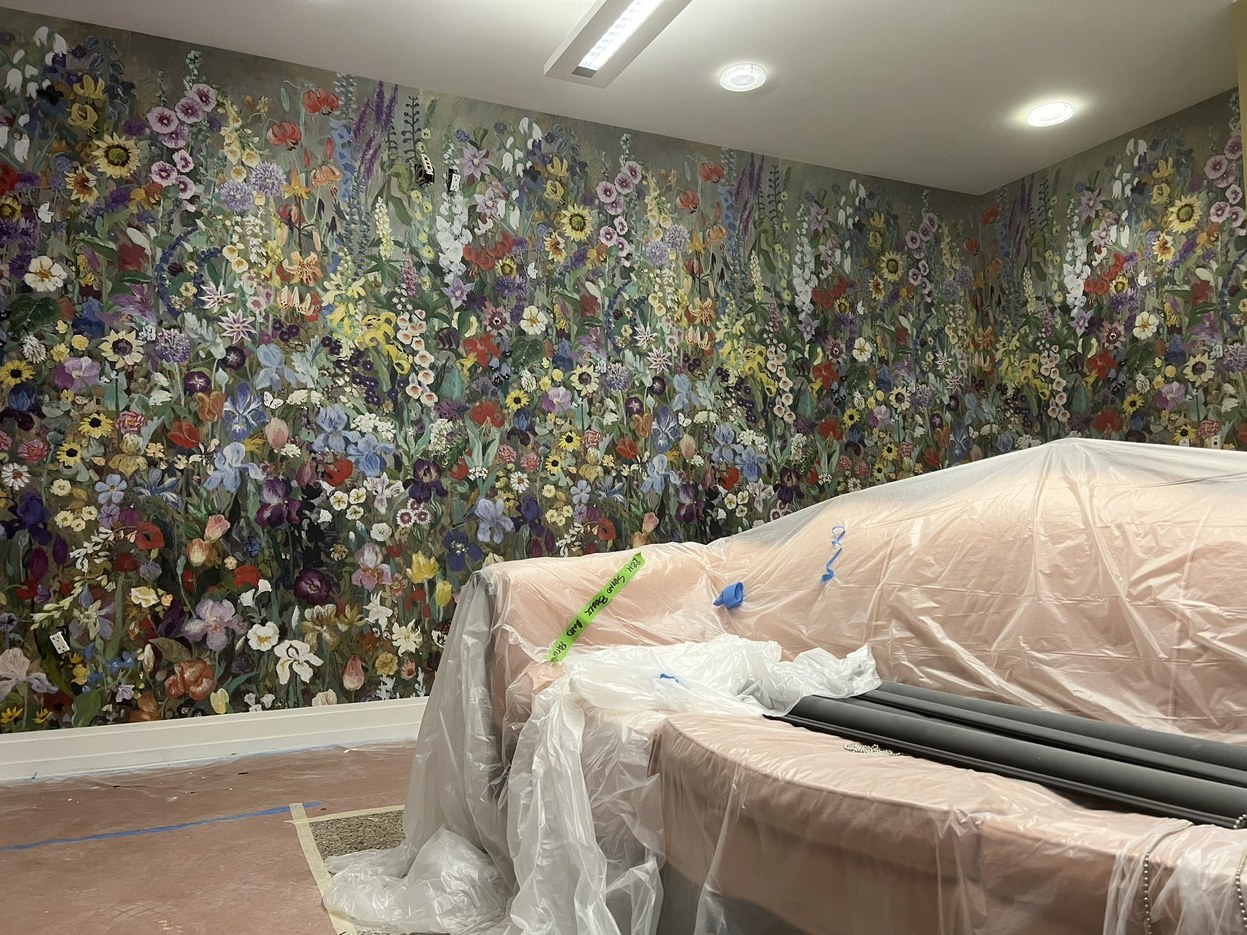
One of those patterns, Hollyhocks, was created for House of Hackney by Kerry Simmons, an American artist, and is based on a painting of her own by the same name. Its published specification is straightforward enough: printed to order at Borås Tapetfabrik in Sweden, paste-the-wall, four 45-centimetre panels to a roll.
So follow the chain. An American artist draws a pattern. A London brand licenses and sells it. A Swedish factory outside Borås prints it. It crosses the Atlantic in a box. A wallpaper hanger from Troy, Michigan opens the box in Birmingham and puts it on the wall.
An American painting, a London wallpaper house, a Swedish factory and a Michigan wall.
The name on the box tells you whose brand it is. It does not always tell you who made it.
What it’s actually like to hang
Enough corporate structure. Here is the part I can speak to without citing anybody.
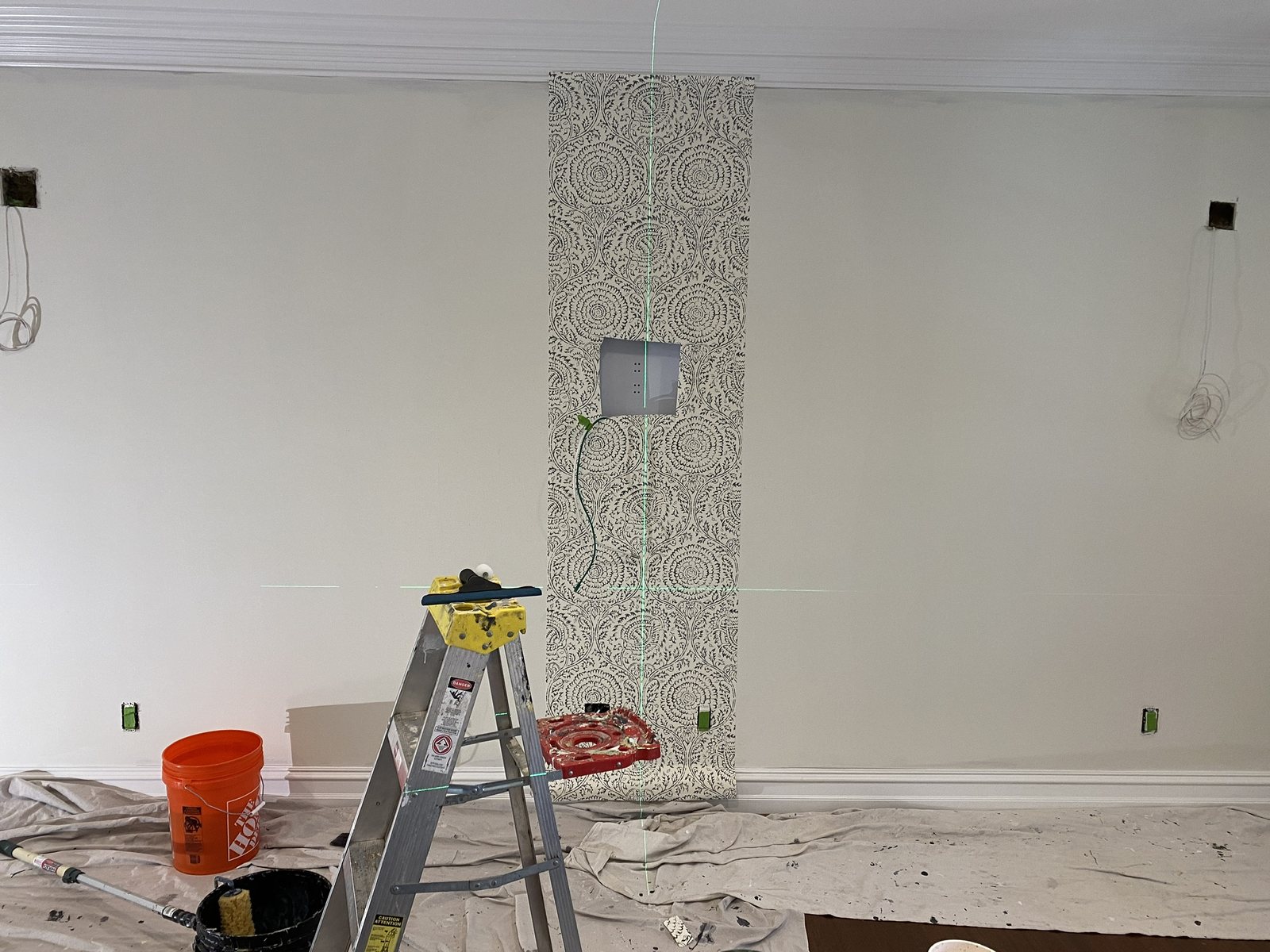
The goods are consistent. Non-woven from these companies arrives flat, cuts clean, and does not fight you. The edges are true. On many murals the panels are numbered, and where there is a printed selvage or trim line, the instructions tell you exactly how the manufacturer wants it handled.
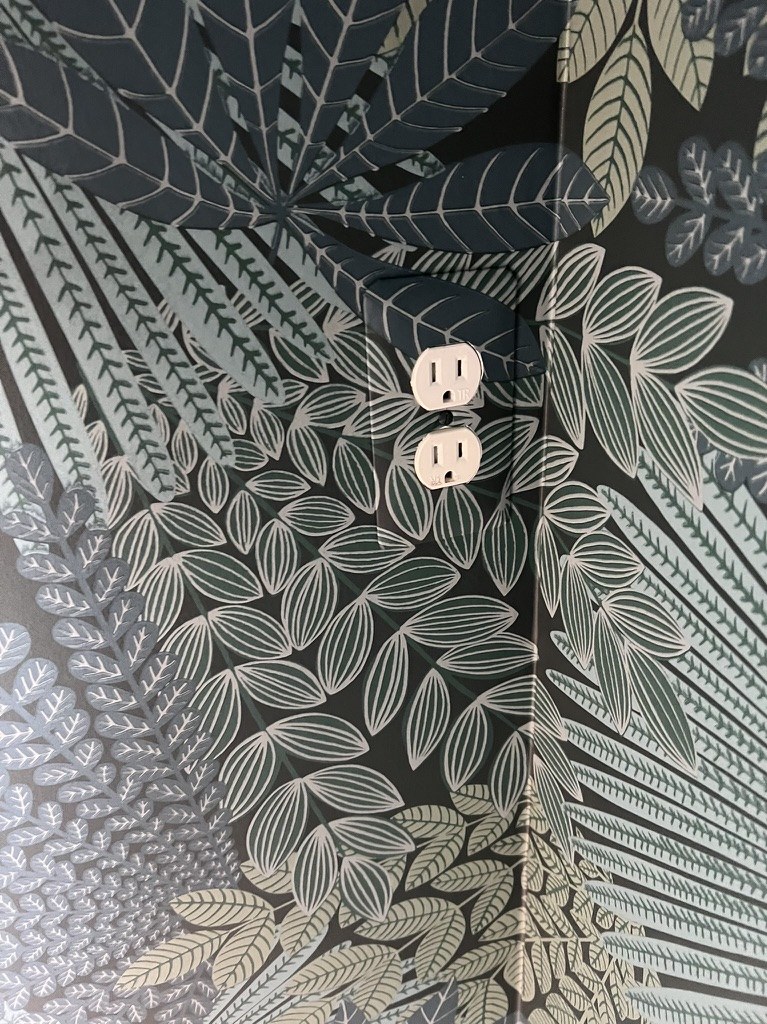
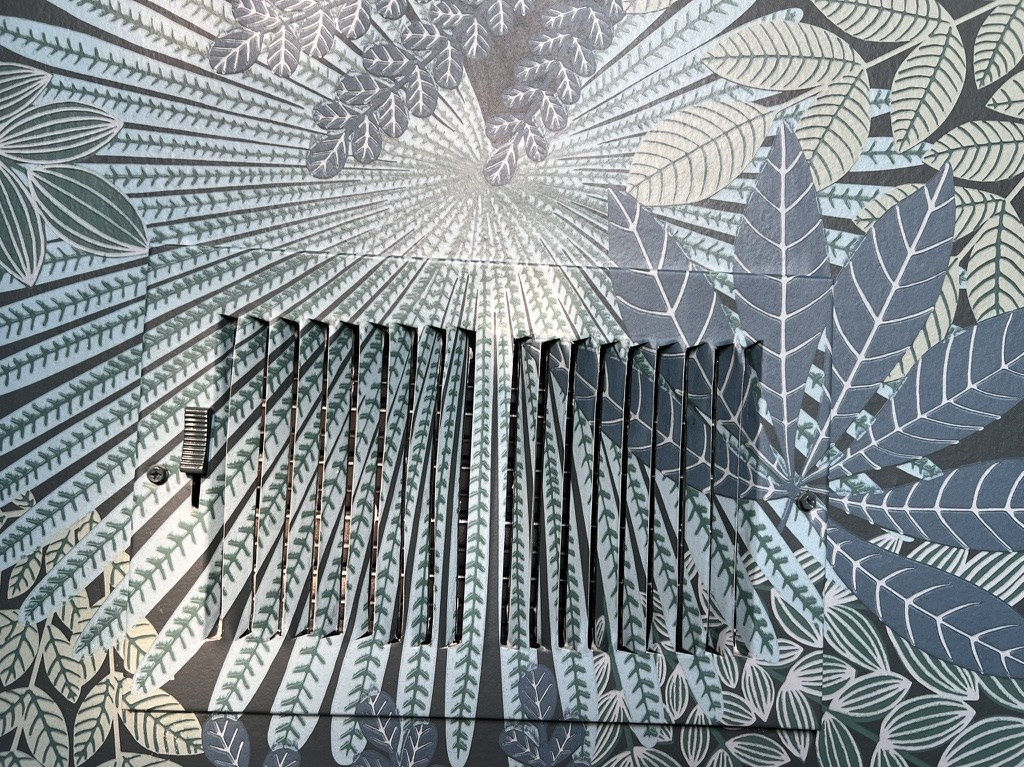
The seams are the best argument. This is where non-woven earns its money. Because the material is not moving on you, a butt seam closes and stays closed. In the close-ups above, that outlet and that register were cut in on a dark, matte, high-contrast ground under direct flash at a raking angle — the single most punishing way to photograph a wall. If a seam were open by a hair, you would see it there. You don’t.
Paste the wall, not the paper. No booking table, no soaking, no fold. It changes how the day runs. On a mural it also means you can position a panel, step back, and adjust it, because nothing is racing you.
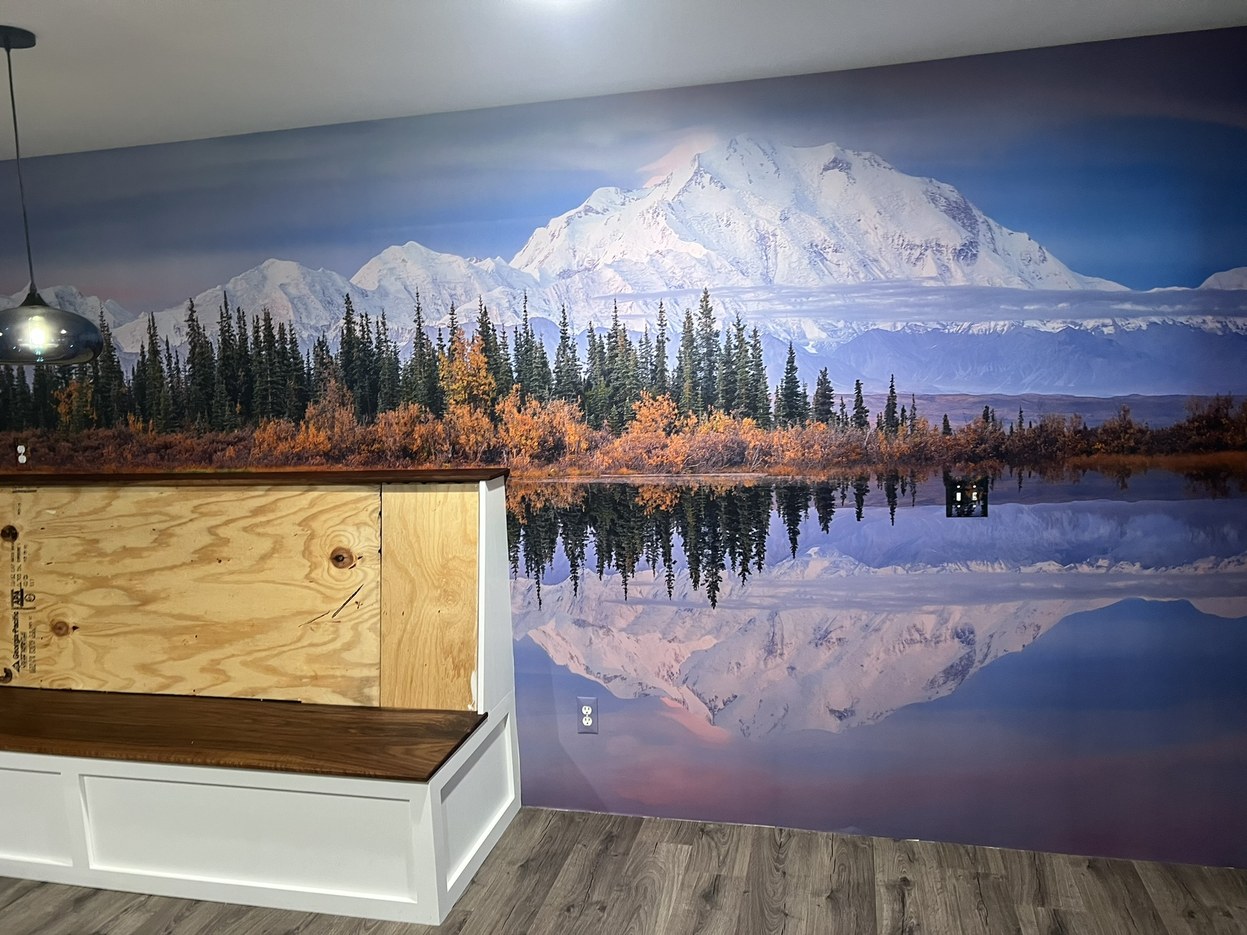
Murals are won or lost before the hanging starts. The decisions that determine whether a mural works are made before it is printed. The mountain-lake wall above is the clearest example I have: the waterline sits just above the top of the banquette because the image was cropped and sized to make it land there. Get that wrong and no amount of skill on installation day fixes it.
I wish everybody would switch.
Once you have hung enough non-woven, going back to paper-backed goods feels like a step down. Hand-printed papers can be beautiful, and some of them are genuinely works of craft — but they move. Scalamandre’s hand-printed zebras are the example I always reach for: introduce any moisture at all and the material becomes a nightmare to work with. That is not a knock on the design. It is the substrate.
Non-woven fixes it. You paste the wall, the strip goes up dry and stays the size you cut it, the seams close, and the goods lie down flat. It is easier on the installer, it is more forgiving on the wall, and from where I sit the material does not appear to cost more for the privilege.
So I do not really understand why more of the old houses have not moved. The Swedes worked this out, committed to it, and built their whole made-to-measure business on top of it. Anyone still shipping paper-backed goods to a job site in 2026 is making the job harder than it needs to be.
What I’ve been hanging
Before the names, the bigger point. The good Swedish non-wovens I am seeing are excellent materials, across the board. They hang beautifully, they seam well, they hold their dimensions, and they have become a large part of what I install.
What follows is not a ranking and not a scorecard. It is what I have to say about the ones that come through my hands, which is a different thing. Where I have something specific to tell you about a brand, I have said it. Where I don’t, I haven’t invented one.
Boråstapeter. One of my favorites for repeating patterns. I like the prints, I like the quality of the material, and it hangs the way you want goods to hang — the seams close and stay closed. In the States you will find them through Schumacher.
Photowall. For custom murals I keep coming back to them, and I have recommended them to clients repeatedly. The strongest part of the product is the process: you work through aspect ratio, cropping and sizing before anything is printed, with real design support behind it. As above, that is where murals are actually won or lost, and they take that part of the process seriously.
Hovia. Excellent goods, a good range, and I have hung enough of it now to say that with confidence.
HappyWall. I hang a lot of it. Another Swedish made-to-measure mural company, out of the same Gimmersta group in Borås, and their own terms state that the wallpaper is manufactured by HappyWall in Sweden.
belarteSTUDIO. I had reason to deal with their customer service on a job. They took care of it. That counts.
A note on House of Hackney, since it features heavily above: it is beautiful on the wall, easy to hang, and expensive. The material itself is not what makes it interesting to me. The manufacturing trail is.
And one thing I want impossible to misread. I am talking here about their pasted non-woven wallcoverings and murals. Those are excellent materials. I do not recommend peel-and-stick wallpaper — not from these companies, not from anybody.
Going the other direction
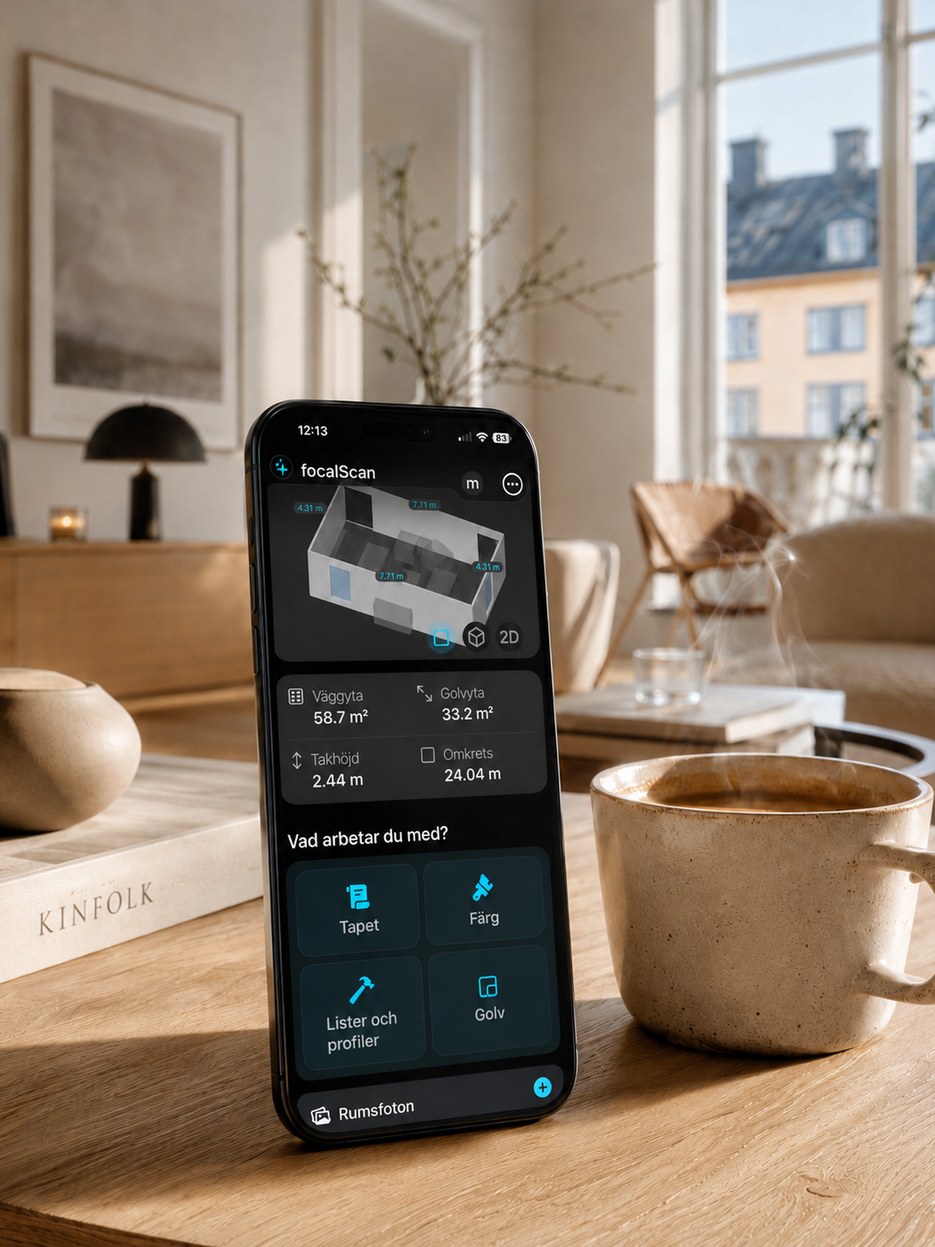
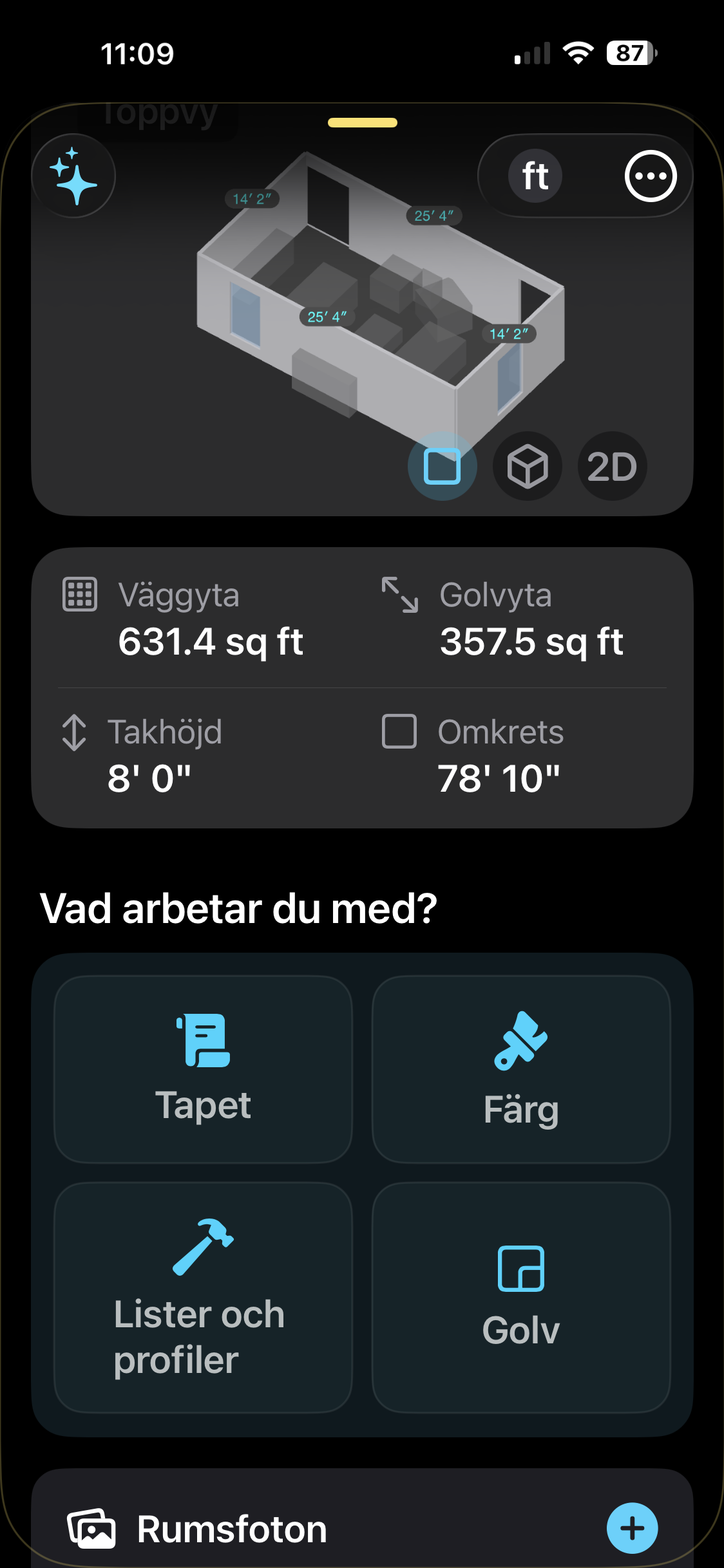
The exchange goes both ways. Sweden sends a surprising amount of wallpaper in my direction, and I send a little technology back. My focalScan LiDAR wallpaper measuring app is available in Sweden too. It can scan a room and calculate the wall area for wallpaper right from a phone. After all these years of Swedish wallpaper finding its way to Michigan, I’m sending a little wallpaper technology in the other direction.
The short version
Sweden did not escape wallpaper’s collapse. It consolidated through it. Factories closed, jobs disappeared, brands were absorbed — more than fifteen Swedish wallpaper factories in the 1970s came down to a handful.
But enough of the design culture, the archives, the manufacturing knowledge and the actual printing capacity survived, much of it concentrated around Borås. A region that could not feed itself learned to make cloth. That became a textile industry that mostly left, and what stayed behind were the head offices, the design studios and the print works. One of those print works has kept a surface-printing press running for over a century. Boråstapeter came close to failing in the 1950s, restructured, caught a national housing boom, and then spent the lean decades retaining Swedish production, acquiring brands, expanding exports and launching new collections.
So when non-woven, digital printing and print-on-demand changed the business, the infrastructure was still there.
Now it prints for its own brands, for brands it owns in other countries, and for brands that belong to somebody else entirely.
Which is why most of the murals I hang, one way or another, trace back to Sweden.
Barry Bernau is the owner of Bernau Designs, specializing in murals, focal walls and full-room installations. He installs wallpaper in Birmingham and Bloomfield Hills, and throughout Metro Detroit.