Peel-and-stick wallpaper has a place. I want to say that first, because the rest of this is going to read like I'm against it, and I'm not. I'm against using it where it doesn't belong — on the feature wall you've planned for a year, in the powder room you want to show off, on anything you expect to look right five years from now. For a dorm, a rental you'll leave, a nursery you'll redo before kindergarten? Go for it. For the wall you actually care about, let me tell you what I see when I show up to take it down.
Reach for it when
- You're in a dorm or a rental and a permanent install costs your deposit
- The room has a shelf life — a kid's theme, a short-term refresh
- It's a backdrop for a booth, a shoot, or a pop-up
- You'll take it down within a year or two, on purpose
Skip it when
- It's a focal wall you want to be proud of for years
- The room sees humidity or temperature swings — baths, kitchens, sunny walls
- You've chosen a real designer paper or a natural material
- You want the seams to disappear, not catch the light
A very fancy sticker
Peel-and-stick is printed vinyl with a pressure-sensitive adhesive on the back. You line it up, press it on, and reposition it as you work. No paste, no water, no booking time. That convenience is the whole pitch, and for the right job it's a real advantage. The trouble starts when the pitch gets stretched into just as good as the real thing. It isn't — and here's where the gap shows.
The honest case for it
Let me be fair. Peel-and-stick is the right tool when the install is meant to be temporary. A dorm or a rental where permanent paper would cost you a security deposit. A kid's room whose theme won't outlast the kid. A renter who wants the space to feel like theirs for a year or two. In all of those, removable vinyl does exactly what it promises — quick to put up, low commitment, and gone when you are. If that's your situation, you don't need me. Buy a good brand, prep the wall, and enjoy it.
The wall you actually care about
Now the wall that matters. Here's what removable vinyl runs into the moment it's asked to last.
The wall has to be flawless first. Peel-and-stick only bonds to a smooth, clean, fully cured surface — ideally a satin or semi-gloss paint that's had three to four weeks to harden. On flat paint, on any texture, or on a wall painted last weekend, the adhesive never gets a proper grip. New construction is sneaky here: the walls look ready, but a thin primer over the drywall mud plus a fresh flat finish gives the adhesive almost nothing to hold — and it tends to let go right along the taped drywall seams.
Humidity and temperature lift the edges. Bathrooms, kitchens, sunny walls — anywhere the air moves between damp and dry, the vinyl expands and contracts, and the corners and seams are the first to let go. Once an edge curls, it does not lie back down.
The seams show. Real wallpaper is hung so the seams vanish into the pattern. Peel-and-stick panels are thick, the print sits right on the surface, and the material stretches a little every time you reposition it — so the pattern drifts and the joints catch the light. On a bold repeat, your eye finds every one.
Some are built to overlap — on purpose. Real wallpaper is butted edge to edge so the seam disappears. A number of peel-and-stick lines are now made to overlap a quarter inch at every seam, by design. That's a raised, doubled ridge running floor to ceiling at every panel width, catching light the whole way down. Picture that on a feature wall. It's the opposite of what you're paying for.
Up close, it looks flat. Printed vinyl has no real texture or depth — it's a photograph of a pattern on a sheet of plastic. From the couch it might pass. Standing beside it, next to a quality paper or a natural grasscloth, the difference is easy to see.
"Removable" carries fine print. The clean-peel promise assumes ideal conditions and a short stay. Leave it up a year or two on real drywall and removal often takes the paint with it — sometimes the paper face of the drywall itself — or leaves an adhesive haze you have to wash and repaint. The wall you were trying to protect becomes the wall you repair.
You're not saving money
Here's the part that surprises people. Good peel-and-stick isn't cheap — the brands worth buying land in the same neighborhood as plenty of traditional papers by the square foot. So on a focal wall, the real comparison isn't cheap vinyl versus expensive paper. It's a look that curls in eighteen months versus a wall that holds for ten or fifteen years.
You're not saving money. You're renting the look — and paying to fix the wall when the lease is up.
From the field
Peel-and-stick out, real paper in
This one wasn't hypothetical. New construction — walls primed and flat-painted, which sounds ready to go. But on a new build the primer over the drywall mud is often thin, the paint is fresh, and a flat finish gives peel-and-stick very little to grab. It pulled right along the drywall seams — the taped-and-mudded joints under the paint — because it never got a real bond and hadn't been up long enough to set. We took it down, reset the wall, and hung a non-woven, paste-the-wall paper instead. To be clear: this isn't peel-and-stick failing everywhere. On a properly bonded semi-gloss, it holds. This wall just never gave it the chance.
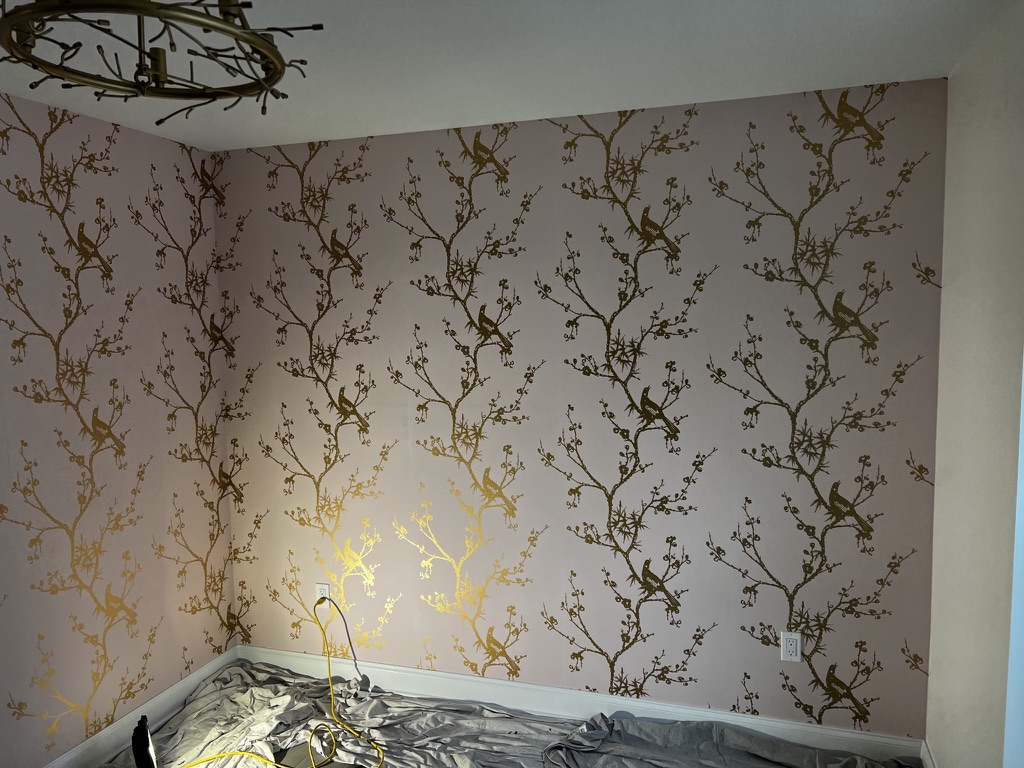
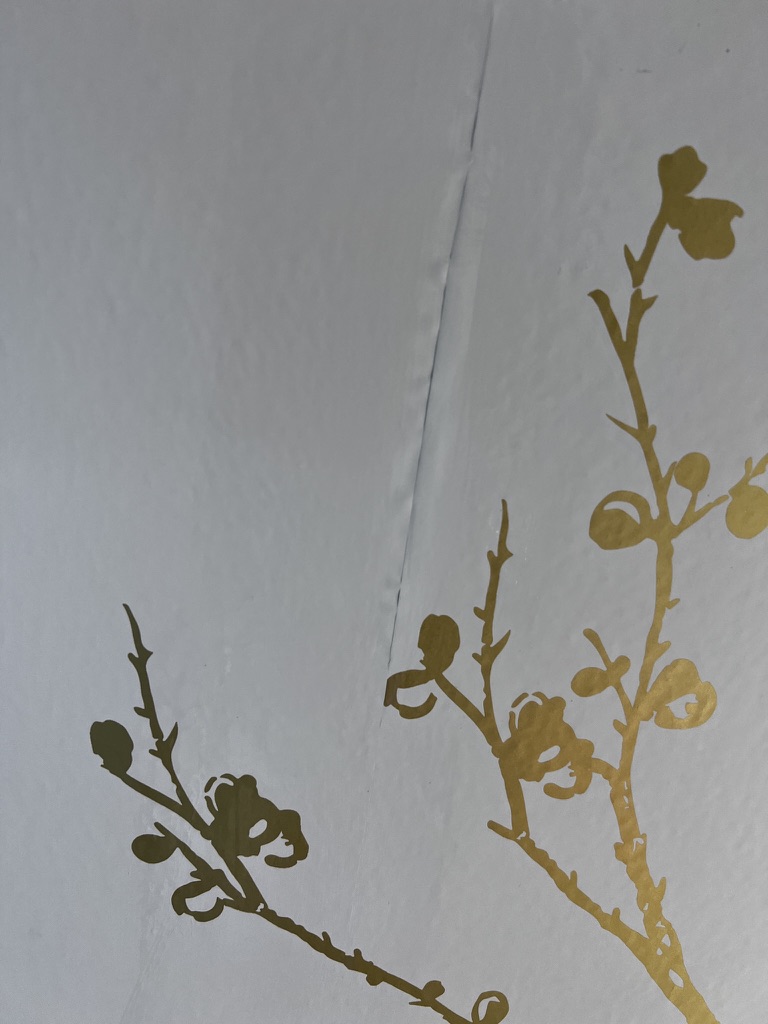
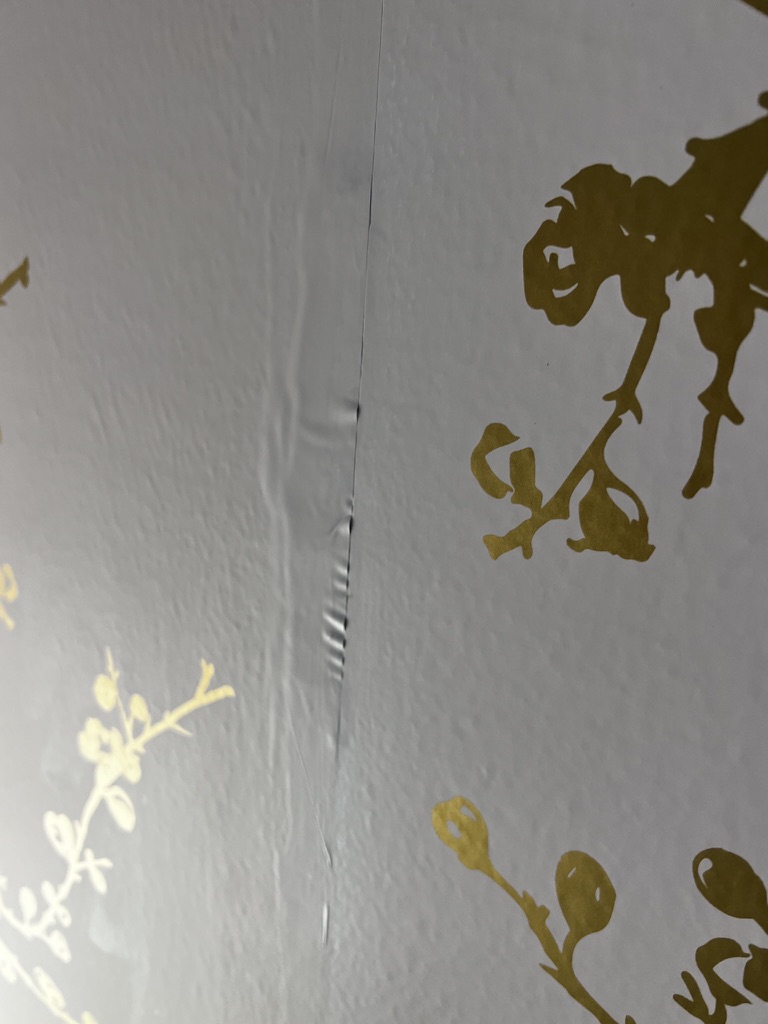
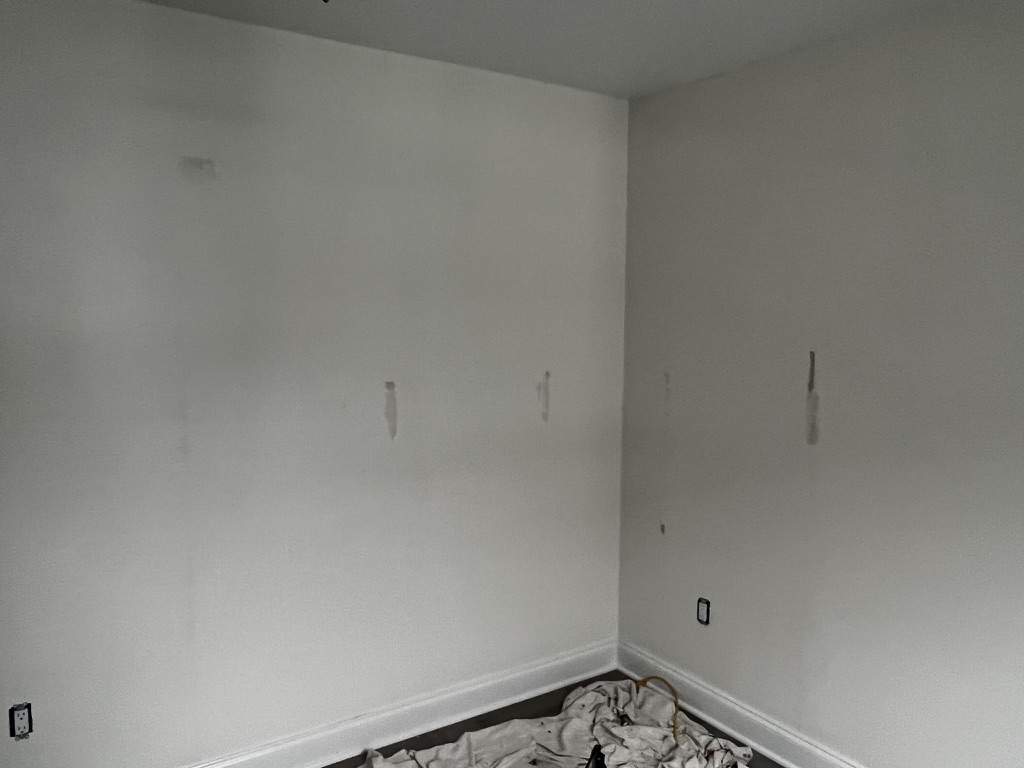
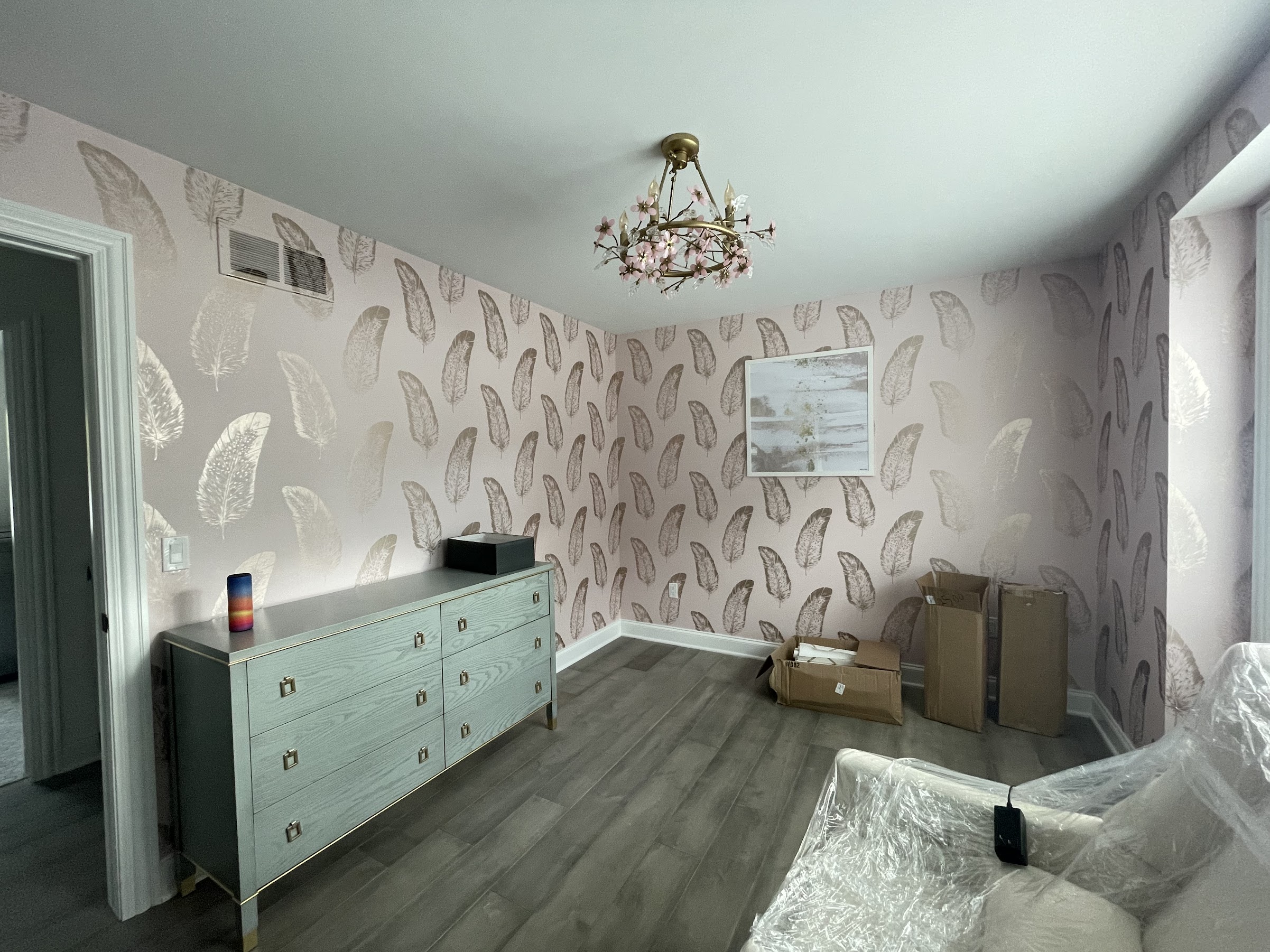
"Barry was wonderful — extremely knowledgeable and clearly experienced. I wish I had listened to him initially about peel-and-stick paper, as we had to change it out halfway through the room. He papered three bedrooms and two bathrooms in our new build and they look absolutely stunning."
Shivangi L. · Google review
Do it once, or do it temporary
So here's my actual advice — the same thing I'd tell you standing in your living room. If the wall is temporary, peel-and-stick is the right call, and I'll be the first to say so. If it's a wall you want to be proud of for years, do it once and do it right: proper goods, hung by someone who's done it a few thousand times. The convenience you give up on the front end, you get back every single day the wall still looks the way you pictured it.